Indigenous American Art
Citizens Federal Savings & Loan donated their collection of Indigenous American Artwork in 1987. This collection features pieces from both North and South America and is displayed throughout Sinclair's campus.
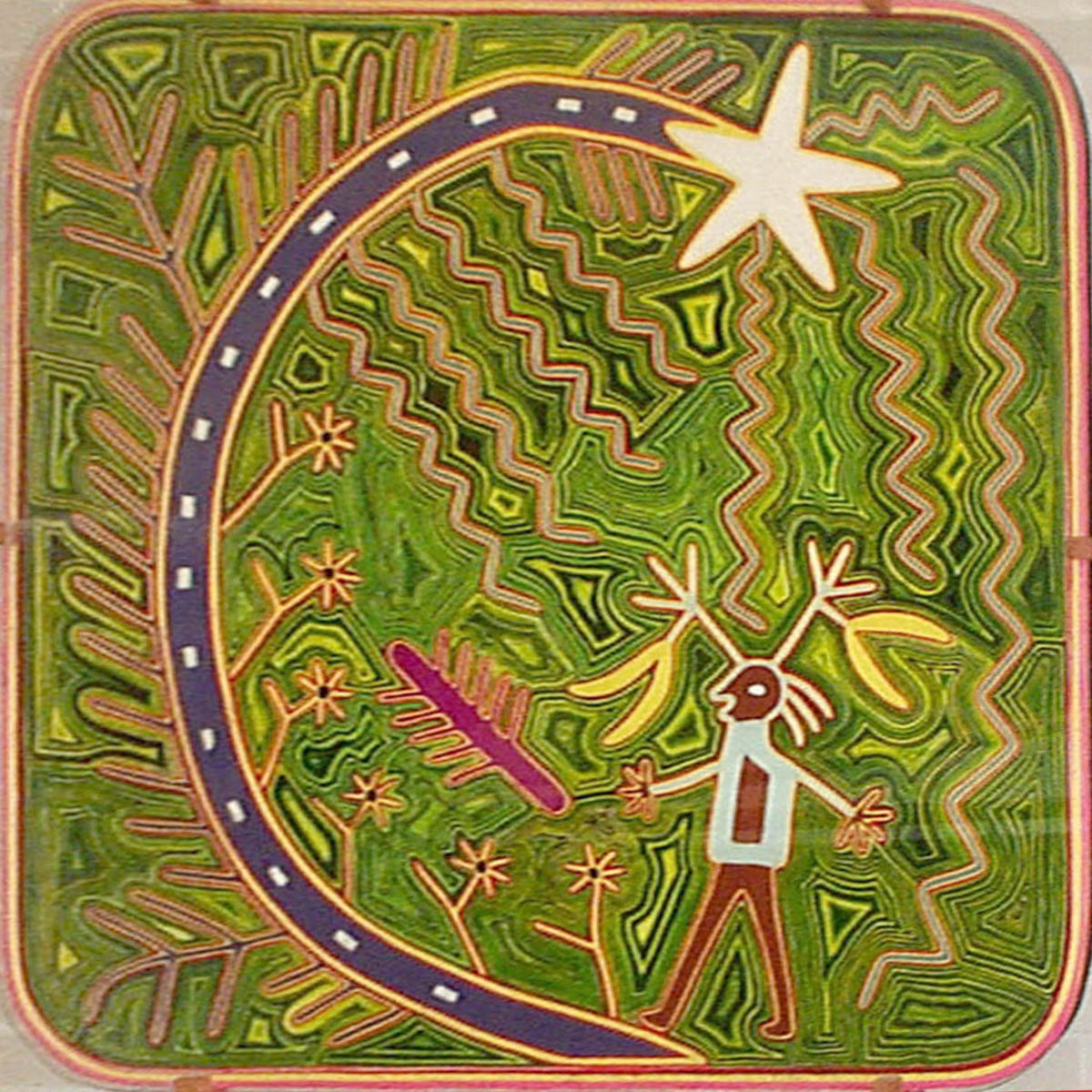
Nearika Yarn Painting
Huichol Culture, Mexico
Fiber Board, Beeswax and resin, Wool Yarn
3' 11" h. x 4'
1987.2.19
Location: Building 1, 3rd Floor
Nierika, a Huichol term, means ritual art. In this visionary painting, an inspired artist communicates with the gods to create a design which may have a whole range different meanings, symbols, and associations.
.jpg)
Painted Fabric
Shipibo Culture, Peru
Cotton Muslin with Vegetable Dye
53.5" h. x 66.125"
1987.2.8
Location: Building 1, 2nd Floor
This patterned fabric is common to the Shipibo and is typically made by the women’s groups in the community. The designs are likely of Ronin, the great serpent mother of all beings in the waters and rivers. The traditional geometric patterns are likely kene, which express the Shipibo worldview and spirituality.
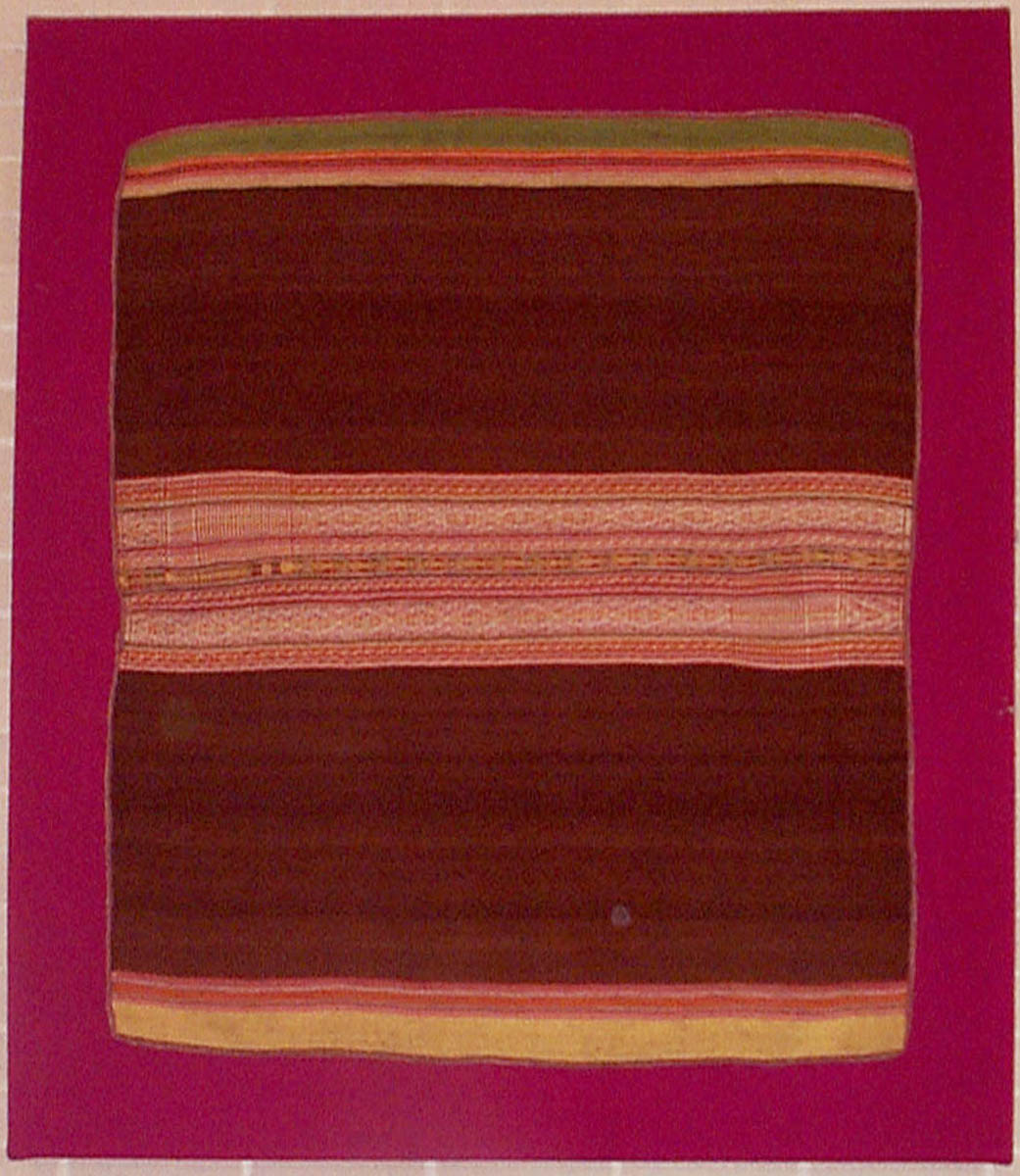
Shawl (Mantle)
Bolivia
Camelid Wood Weaving
Date: Mid 20th Century
42.75" h. x 36"
1987.2.6
Location: Building 3, 3rd Floor
Typically worn by men, this mantle is woven in two panels, using a backstrap loom, and then sewn together. A slit in the center allows the garment to be put over one’s head.
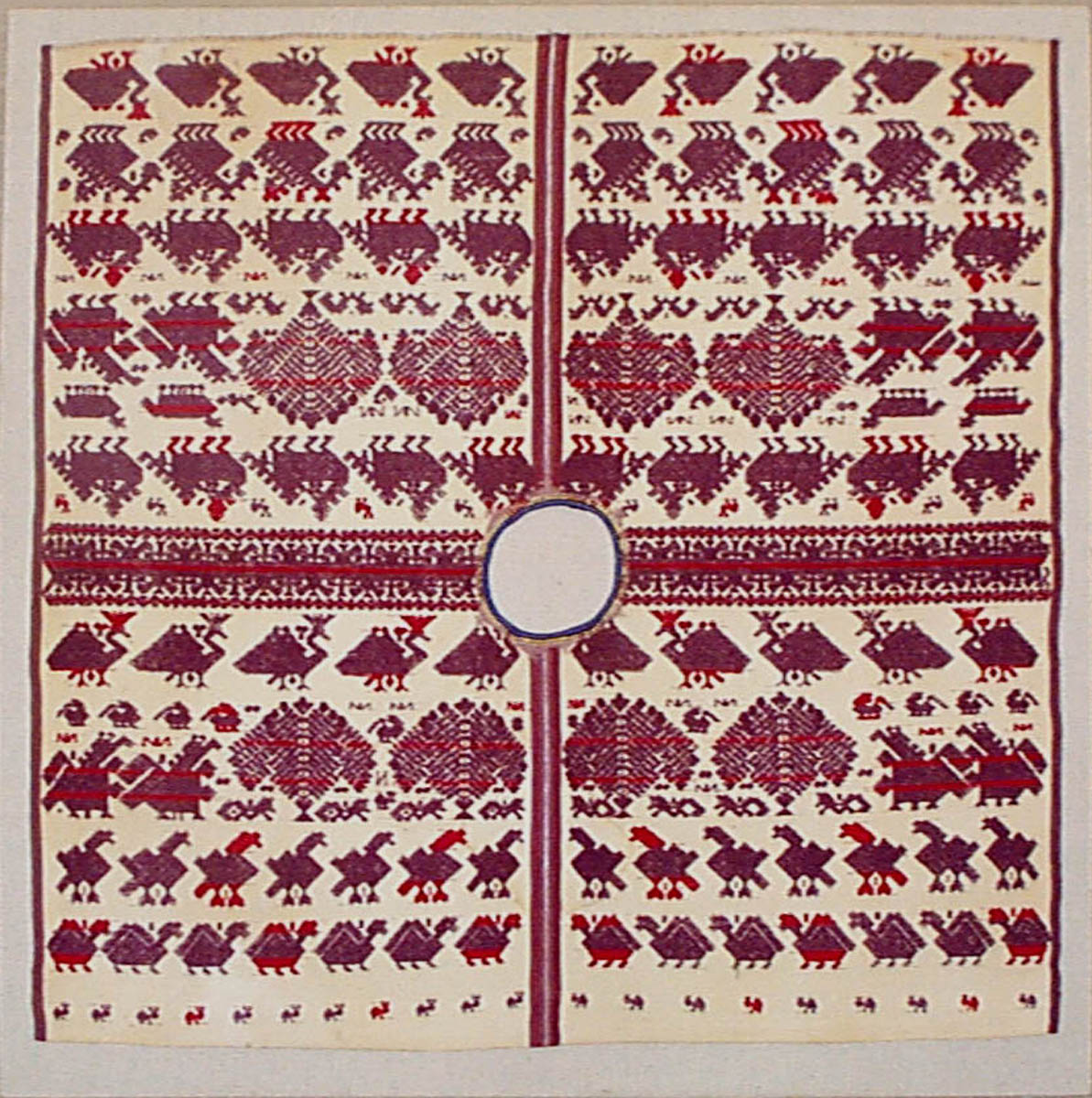
Embroidered Huipil (Woman's Blouse)
San Pedro Sacatepequez, Guatemala
Cotton Muslin with Embroidery
Date: Mid 20th Century
4' 3" h. x 4' 2.5"
1987.2.7
Location: Building 3, 2nd Floor
This Huipil, a loose-fitting tunic, is traditionally embroidered with various animal designs and a flowering tree design common to its region. It is typically worn as a blouse, tucked into the skirt and held in place with a belt.
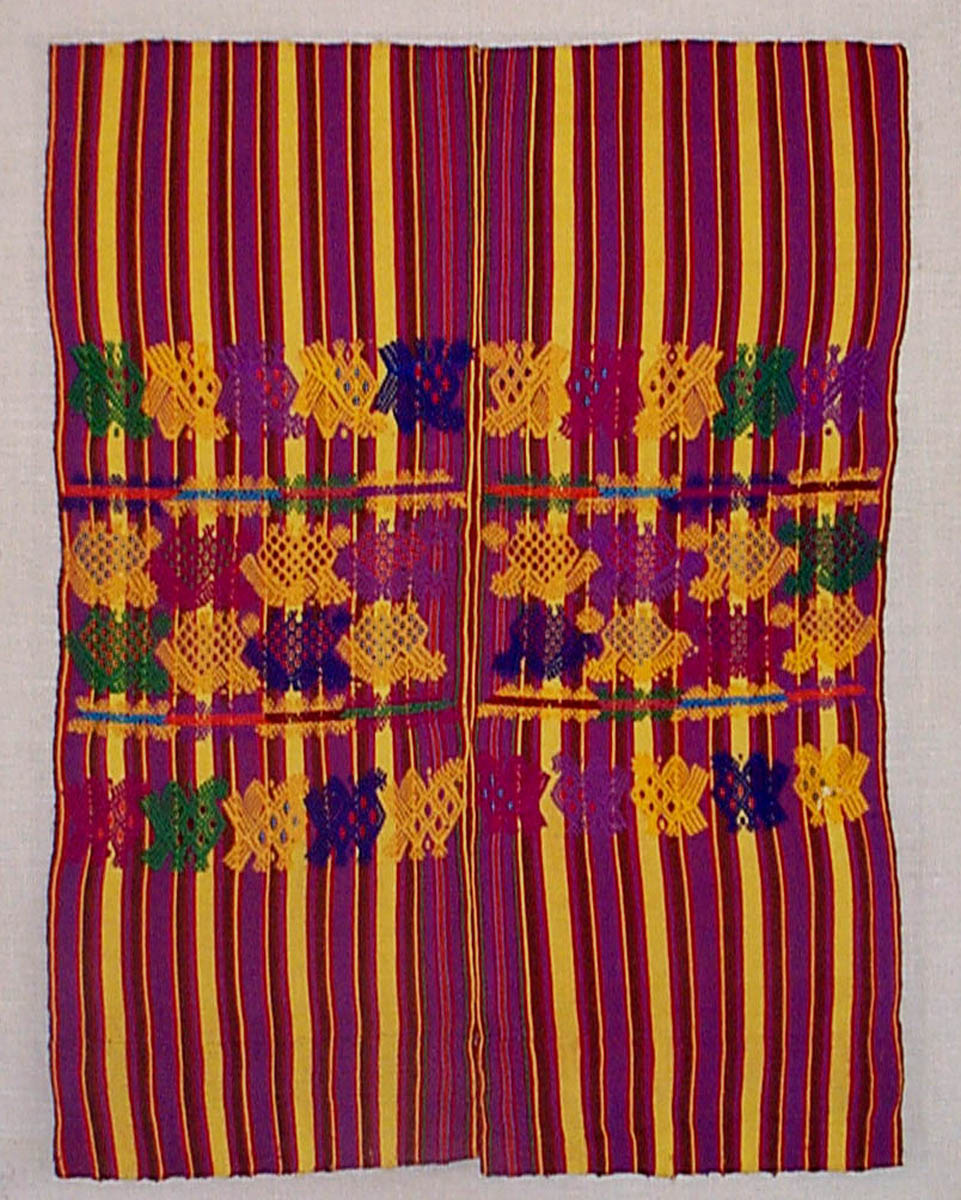
Huipil (Woman's Blouse)
San Pedro Sacatepequez, Guatemala
Embroidered Fabric
Date: Mid 20th Century
5' h. x 4'
1987.2.12
Location: Building 4, 2nd Floor
Each Guatemalan village has its own design for clothing. This specific huipil is typical of the San Juan Sacatepequez village in the western highlands of Guatemala.
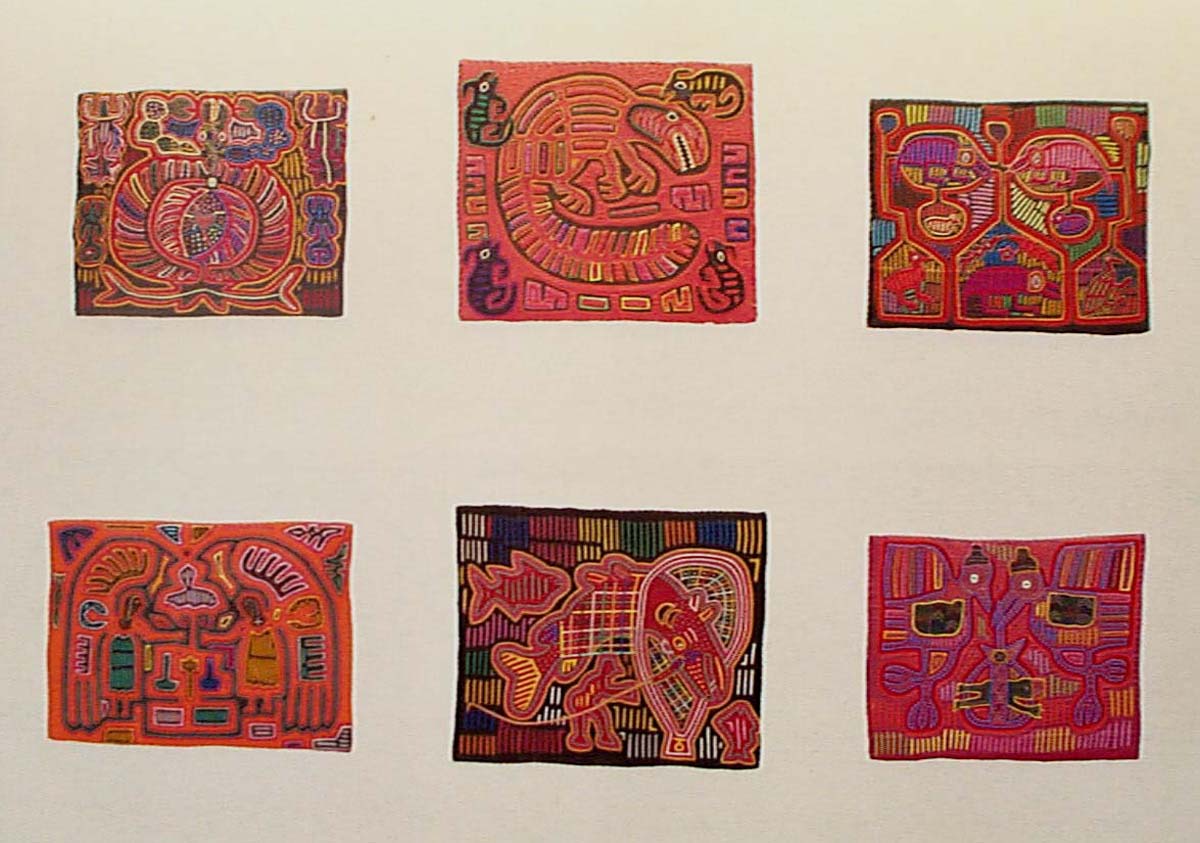
San Blas Molas
Kuna Culture, Panama
Textile
6' h. x 6' 9"
1987.2.4
Location: Building 4, 1st Floor
Mola’s are the panels of a woman’s loose-fitting blouse. These blouses are worn by the Kuna women and children of the San Blas Archipelago, located off the eastern coast of Panama.

Animal Motif Tapestry
Zapaotec Culture, Mexico
Wool
90" h. x 56"
1987.2.33.1 and 1987.2.33.2
Location: Building 5, 2nd Floor
The Zapatec culture, sometimes referred to as the Oaxacan culture, is known for their crafts and wool rugs. Their religion focused on ancestor worship and therefore much of their art was produced for funerary rites.
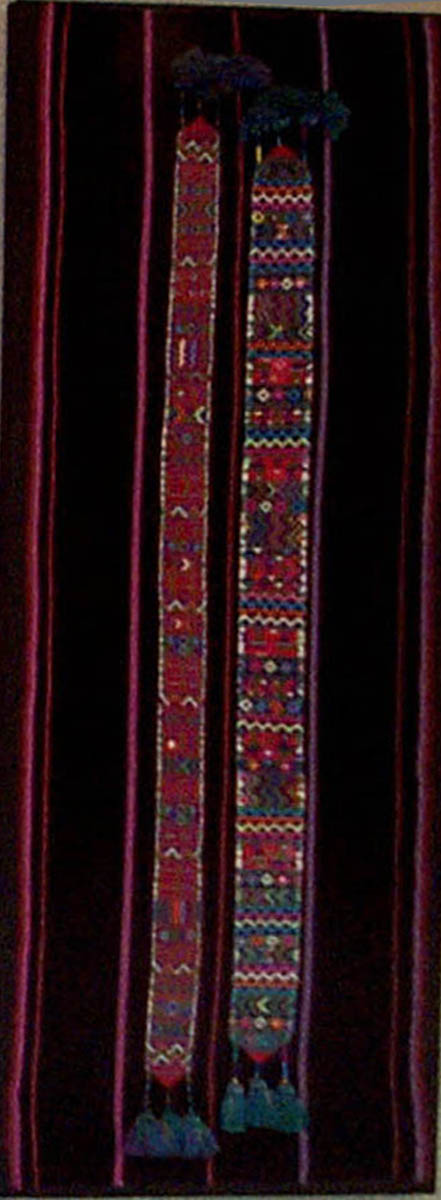
Cinta (Hair Ribbon)
Aguacatán, Guatemala
Weaving
100.5" h. x 28.75"
1987.2.9
Location: Building 6, 3rd Floor
Each Guatemalan village has their own textile designs. Aguatecas is famous for their brightly embroidered Cintas. It is wound around a woman’s ponytail, covering it, and then wrapped, halo-like, around the head.
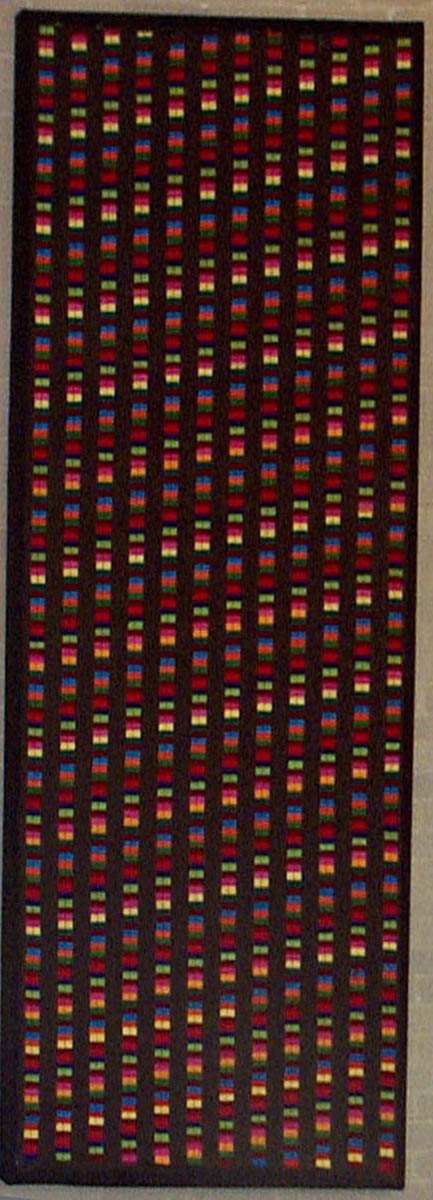
Embroidered Cloth
Guatamala
Weaving
8' 5" h. x 2' 11"
1987.2.11
Location: Building 6, 3rd Floor
There are more than 800 different styles of indigenous clothing in Guatemala. Traditionally, women used the backstrap loom to create similar textiles.
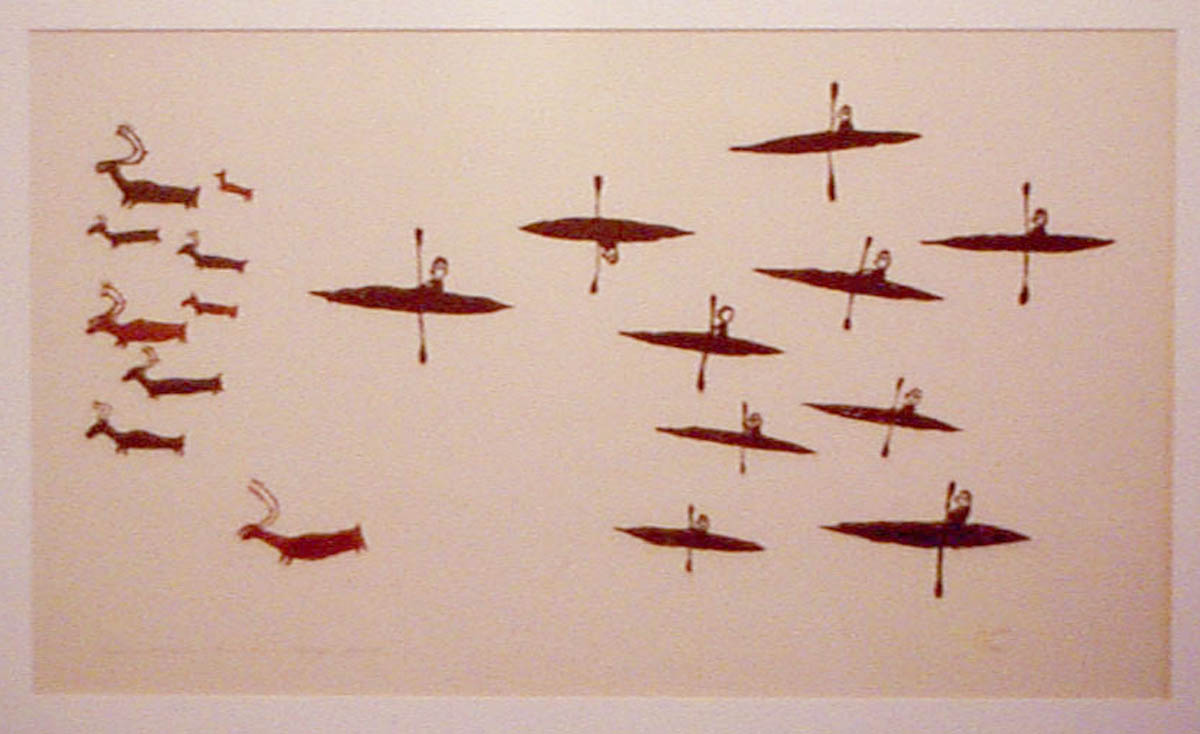
Kayaks and Caribou
Luke Anguhadluq, Inuit/Arctic
Print
34" h. x 49"
1987.2.15
Location: Building 6, 3rd Floor
The print contains images typical of life near Qamani’tuaq (Baker Lake), Canada where the artist resided. At 73, Anguhadluq began drawing and printmaking, exploring themes of hunting, drum dancing, and community.
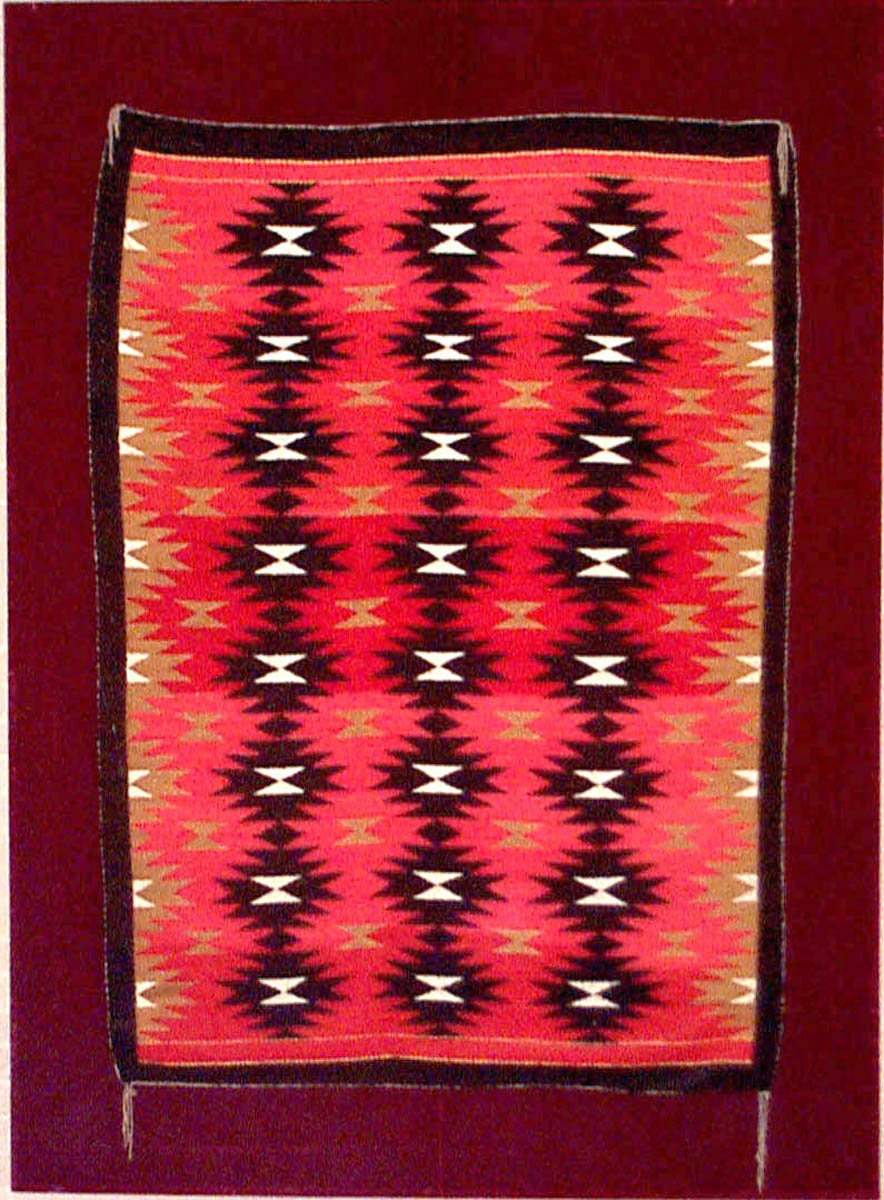
Trading Post Rug
Diné (Navajo)
Wool with Natural Dyes
Date: 1920
70" h. x 49.5"
1987.2.18
Location: Building 6, 2nd Floor
The Navajo began using looms to weave in the late 18th century. This rug is typical of the designs of the Navajo Rug Period (1890 – 1920). Rugs like these were made for trading posts to display for tourists to purchase.
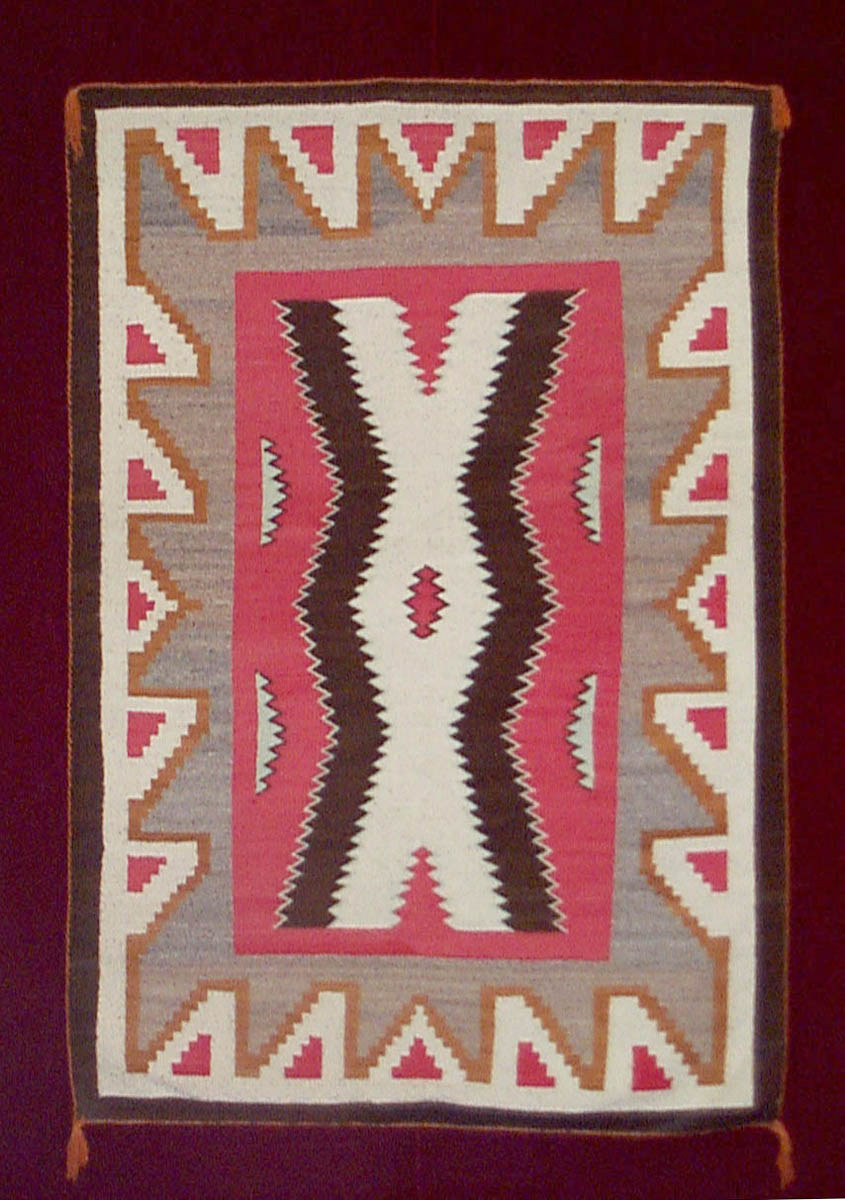
Outline Rug
Diné (Navajo)
Woven Wool with Continuous Warp Thread
Date: 1920
68.5" h. x 47"
1987.2.17
Location: Building 7, 3rd Floor
The Navajo began using looms to weave in the late 18th century. This rug is typical of the designs of the Navajo Rug Period (1890 – 1920). Rugs like these were made for trading posts to display for tourists to purchase.
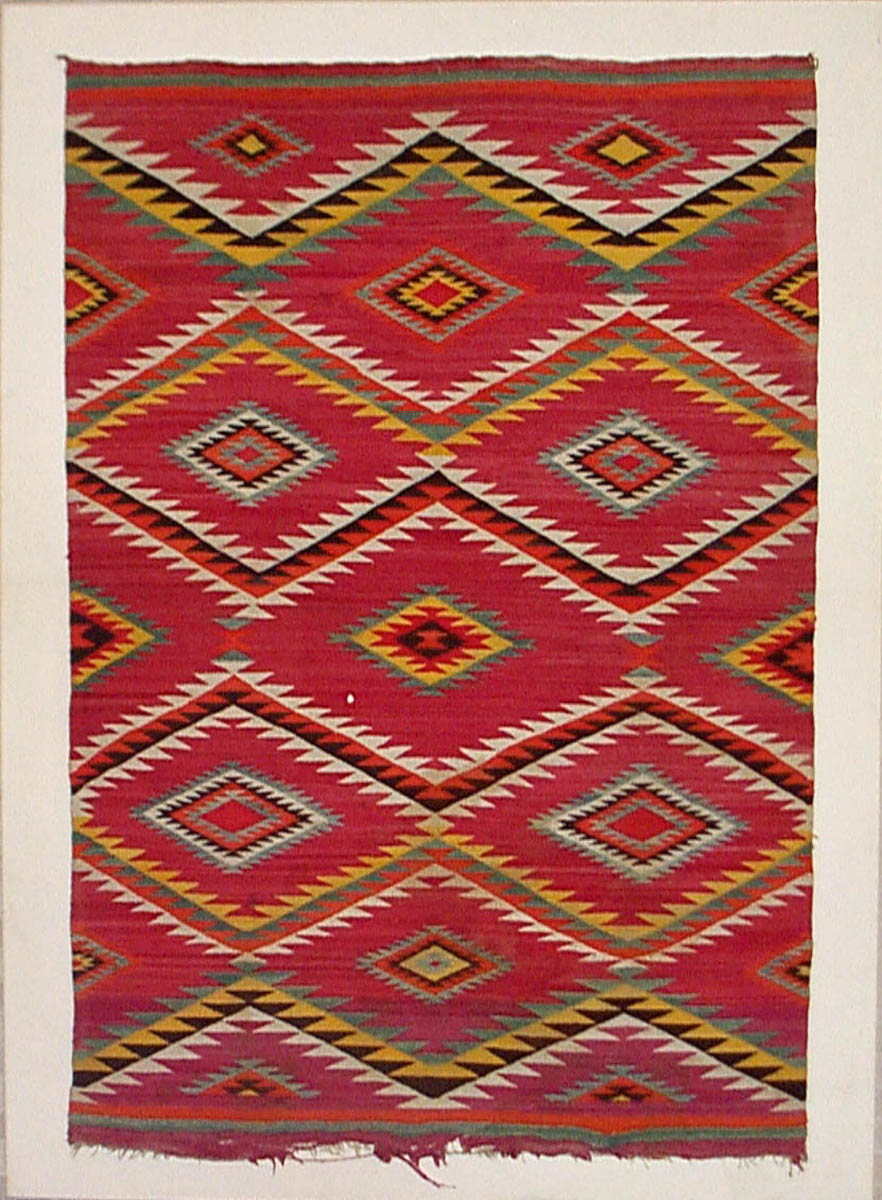
Revival Blanket
Diné (Navajo)
Wool, Aniline Dyed Germantown Yarn
Date: 1890-1910
86.25" h. x 59.25"
1987.2.34
Location: Building 7, 3rd Floor
This rug is typical of the designs of the Navajo Rug Period (1890 – 1920). Blankets like these were made for trading posts to display for tourists to purchase. Documentation indicates that the Navajo began using looms to weave in the late 18th century.
.jpg)
Llama Fur Mandela
Peru
Alpaca Fur on Canvas Background
Date: mid 20th century
7' h. x 7'
1987.2.5
Location: Building 7, Library
Alpaca and Llama fur rugs have been made by hand for a thousand years in Peru. Pelts are selected by color and texture and then sewn together to make the intended design.