January Newport
 Can you tell us a little about yourself?
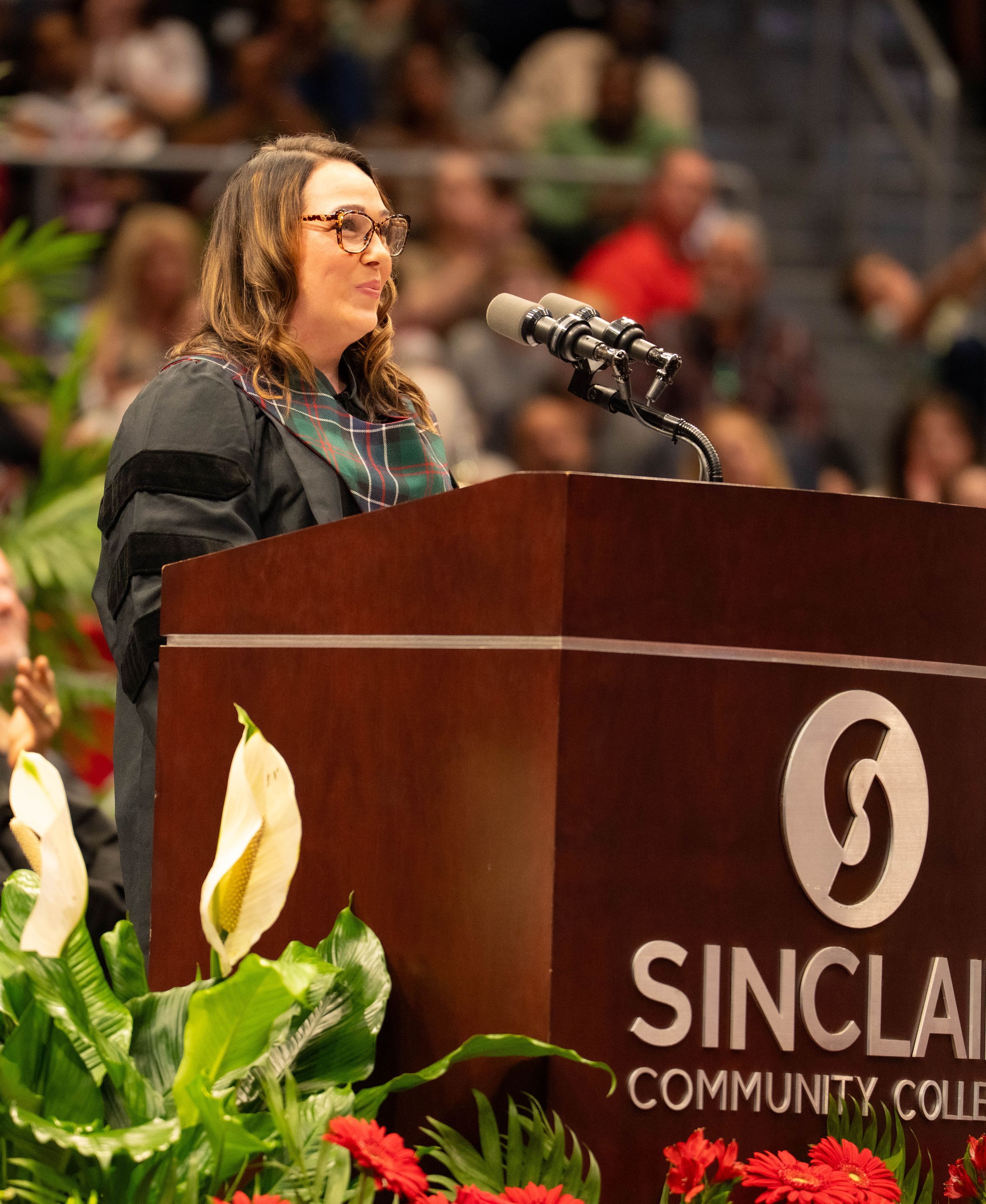
I began my Sinclair journey in 2015 as a student in the Sinclair Advanced Job Training Program, the college’s prison education program, while I was incarcerated at the Dayton Correctional Institution. Through that program, I completed the educational requirements to become a Chemical Dependency Counseling Assistant. After my release, I continued my Associate degree in Addiction Services and graduated in 2018. Since then, I have earned both my bachelor’s and master’s degrees in social work. I am now a licensed social worker and an independently licensed chemical dependency counselor. I currently serve as a Program Coordinator with the Montgomery County Office of Reentry, where I help men and women overcome barriers related to justice involvement. Most importantly, I am a proud and present mother to my son, my daughter, and a dedicated member of my family.
What inspired you to pursue your career path, and how did Sinclair help you get there?
While I was incarcerated, I met a staff member who had his own history of legal involvement, yet he was employed by the State of Ohio and held a chemical dependency license. Seeing someone succeed despite past justice involvement showed me what was possible especially when I realized that Sinclair offered the same career path he had taken. Sinclair’s prison education program gave me hope, direction, and a starting point. It showed me a future I didn’t know was possible.
How would you describe the impact Sinclair had on your life, both in and out of the classroom?
Sinclair gave me valuable connections that paved my path to becoming a clinician. The staff always believed in me when I did not see potential in myself and understood the pressure I was under from being a first-generation college student. My academic advisors were always very helpful and I knew they truly cared about my future.
Describe the impact Sinclair had on your life, both in and out of the classroom.
Sinclair is the foundation on which I have built a successful life. I truly would not be where I am today without Sinclair. My professors encouraged me, believed in me, and helped me build confidence during a time when I needed it most. Because of Sinclair, I have had opportunities I never imagined, traveling to Washington, D.C. with the college president, returning as a guest panelist, and even serving as a commencement speaker both at the women’s prison where my journey began and on the main campus. To me, Sinclair is more than a college. It is a family that opened doors, provided support, and believed in my potential long before I believed in myself.
How has your definition of success changed from when you were a Sinclair student to now?
As a Sinclair student, success meant earning my associate degree and obtaining my first licensure as a chemical dependency counselor. Today, success has evolved. It now means continuing to set new goals every time I accomplish one and never stopping my personal and professional growth. Earning my master’s degree has shown me what’s possible, but the greatest success is watching the people I work with start to believe in themselves—because someone believed in me. For me, success is giving back what was so freely given to me.
What is one piece of advice you would give current Sinclair students?
Education is a key to success. When you accomplish one goal, set another and keep moving forward. Your journey is not defined by where you start, but by the goals you continue to reach for.